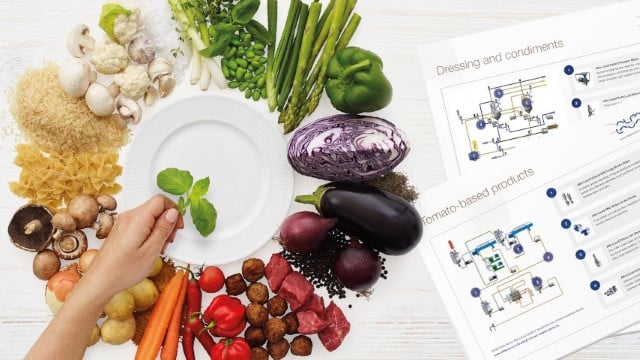
Línea M
La línea M de Alfa Laval de intercambiadores de calor de placas y bastidor con juntas se utiliza para presiones de diseño elevadas (>10 bar/145 psi), como en las bebidas carbonatadas. La amplia gama de tipos de placas y juntas cumple los requisitos de materiales en contacto con alimentos (FCM) para pasteurización y otras tareas de calentamiento y enfriamiento en aplicaciones higiénicas y de servicios públicos en las industrias láctea, alimentaria, de bebidas y farmacéutica.
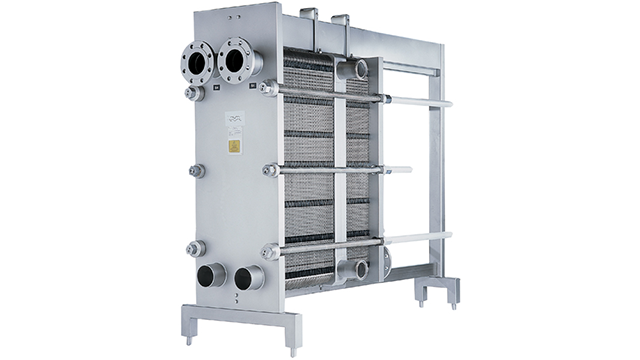
Elección competitiva para procesos higiénicos a alta presión y aplicaciones de servicios públicos
- Diseñado específicamente para alta presión de diseño
- Alto grado de facilidad de mantenimiento: juntas conformes con la FDA para facilitar la apertura, inspección y limpieza.
- Resistencia al ensuciamiento y eficiencia térmica gracias a la gama de profundidades de prensado y patrones de chevron, así como a diversas ondulacion
- Flexible: el área de transferencia de calor puede modificarse añadiendo o quitando placas o combinando placas y materiales diferentes.
- Adecuado para intercambiadores de calor de varias secciones para pasteurización que ahorran espacio, tuberías y costes
Optimización de funciones: Los intercambiadores de calor de la línea M están disponibles en tres tamaños diferentes y funcionan con varios tipos de placas para garantizar un rendimiento óptimo para su aplicación.
Plate types for different hygienic needs
Two different plate types are available for BaseLine & M Line gasketed plate heat exchangers:
- Chevron type plate pattern ensures good distribution of the product as well as high thermal efficiency and is used in food, dairy, beverage and pharma industries.
-
Gemini double-wall plates ensure a fully mix-proof design. It consists of two plates pressed together and prevents cross contamination between fluids in case of leakage through the plates.
The chocolate pattern distribution area ensures that the fluids are evenly distributed across the entire plate to avoid stagnant zones that can result in fouling.
The chocolate pattern distribution area ensures that the fluids are evenly distributed across the entire plate to avoid stagnant zones that can result in fouling.
Cómo funciona
Channels are formed between the plates and the corner ports are arranged so that the two media flow through alternate channels. The heat is transferred through the plate between the channels, where the counter-current flow helps attain the highest possible efficiency. The corrugation of the plates provides the passage between the plates, supports each plate against the adjacent one and enhances the turbulence, resulting in efficient heat transfer. Our thermal design engineers will help you design and select the model and configuration that is suitable for your application needs while delivering maximum thermal performance and minimizing pressure drop.
Alfa Laval hygienic liquid/liquid GPHE
Alfa Laval multi-section pasteurizer GPHE
Multi-section hygienic GPHE
Features
Adjustable feet
Bearing box
Connection plate roller
Elongated nuts
Fixed bolt head
Key hole bolt opening
Lock washer
Pressure plate roller
Tightening bolt cover
Part of a broad range of hygienic gasketed plate heat exchangers
Ten top tips - Hygienic Gasketed Plate Heat Exchangers
Here are some tips and service videos to show you how you can keep your hygienic gasketed plate heat exchangers in tip top condition.
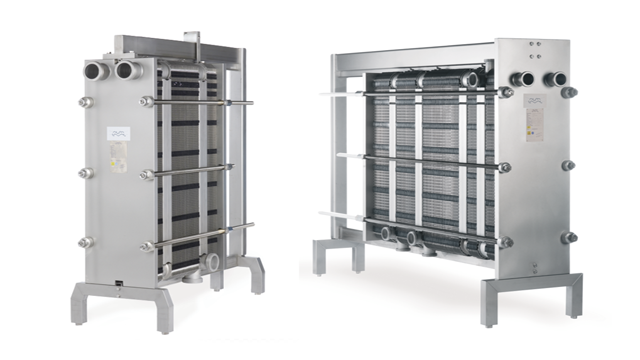
Demand new standards
Introducing the world’s most modern gasketed plate heat exchangers. Discover how our next-generation line of gasketed plate heat exchangers will bring you higher efficiency, better reliability and greater serviceability.
Food Logic
Alfa Laval's hygienic equipment combines high performance with gentle handling to preserve sensitive ingredients and keep up with the food industry trends. The equipment addresses four key challenges; supplying food products to consumers at a competitive price, getting the most from raw materials, reducing waste and emissions, and delivering safe and hygienic food products.